


Research Author Abbie Sng

Beyond High Fidelity: Refining Preparation, Differentiation, and Checklist Usability for the the New Numeracy Curriculum (2026)

This study examined teachers’ implementation of a new numeracy curriculum across N2, K1 and K2 classrooms, focusing on implementation fidelity, perceived difficulty, and the usefulness and ease of an accompanying tracking checklist.

Teachers completed a structured implementation survey using four-point rating scales. Overall implementation fidelity was high, while lesson implementation difficulty was moderate. The main challenges involved preparing materials, balancing discussion with hands-on activities, and responding to differing learning needs. When fidelity and difficulty were considered jointly, 51% of teachers demonstrated high fidelity with lower implementation difficulty, while 49% maintained high fidelity despite experiencing greater implementation burden. The tracking checklist was perceived as useful, although ease of use was more mixed. Overall, the findings indicate that the prototype was implemented with high fidelity, but successful implementation was accompanied by considerable effort for some teachers. Refinement should therefore focus on reducing preparation and delivery demands and improving checklist usability to support sustainable classroom implementation.
Read MoreBeyond High Fidelity: Refining Preparation, Differentiation, and Checklist Usability for the the New Numeracy Curriculum (2026)

TheraNest: Improving the efficiency and consistency of child therapy documentation process using AI

TheraNest is a digital platform designed to support therapists in documenting, organising, and communicating children’s therapeutic progress in a structured and efficient manner.

Therapeutic work with children involves numerous small but meaningful observations that contribute to understanding developmental progress over time. However, recording these insights consistently while managing clinical workloads can be challenging. TheraNest provides a centralised workspace where therapists can record session observations, track interventions, and maintain organised records for each child. Over time, these records form a clear developmental timeline that supports reflective practice and informed decision-making.

The platform also enables therapists to generate concise, parent-friendly summaries that facilitate communication with families and other professionals involved in the child’s care. By streamlining documentation and consolidating information into a single system, TheraNest supports continuity of care and professional collaboration.

Ultimately, the platform aims to enhance the efficiency and clarity of therapeutic documentation while supporting meaningful developmental outcomes for children.

Read MoreTheraNest: Improving the efficiency and consistency of child therapy documentation process using AI

Baseline Sustainability Awareness Among Children in 2025

This paper presents the 2025 baseline profile of sustainability awareness among K1 and K2 children, based on a validated assessment tool measuring reasoning across six environmental domains. Findings show that children demonstrate foundational sustainability understanding from K1, with K2 children consistently offering deeper eco-centric reasoning. Domain-level analyses highlight developmental shifts in the sophistication of children’s explanations, with older children demonstrating clearer cause and effect reasoning, stronger environmental empathy, and more abstract conceptual links. These findings reaffirm the developmental nature of sustainability thinking and highlight the importance of intentional, integrated sustainability education practices.

Read MoreBaseline Sustainability Awareness Among Children in 2025

The Effects of Outdoor School Programmes on the Resiliency of Five Year Olds

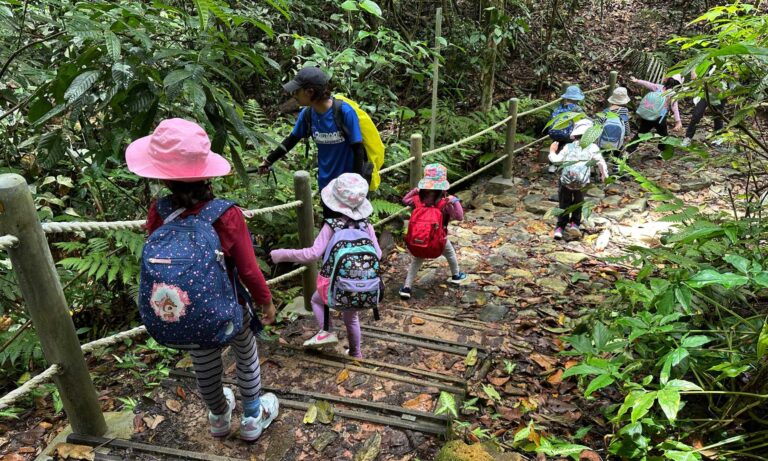
This study looked at the effects of Outdoor School (OSS) programmes on the resiliency of five-year-olds by examining children’s mastery motivation. Mastery motivation reflects children’s willingness to engage in moderately challenging tasks, persisting in an independent focused manner.

A mixed-methods approach with teacher questionnaire ratings for children before and after their programme, in-field observations, and child-friendly interviews with drawings was used.

The results showed children demonstrated improvements in persisting with tasks, taking on challenges, and approaching problems with increased competence. Qualitative findings complemented these results, children integrated their experiential learning into their drawings and narratives, and effectively reflected developing personal strategies to problem-solve moderately challenging tasks.

Overall, the study demonstrates that OSS programmes foster children’s mastery motivation and resilience, support broader developmental outcomes, and underscores the value of experiential outdoor experiences in early childhood.

Read MoreThe Effects of Outdoor School Programmes on the Resiliency of Five Year Olds